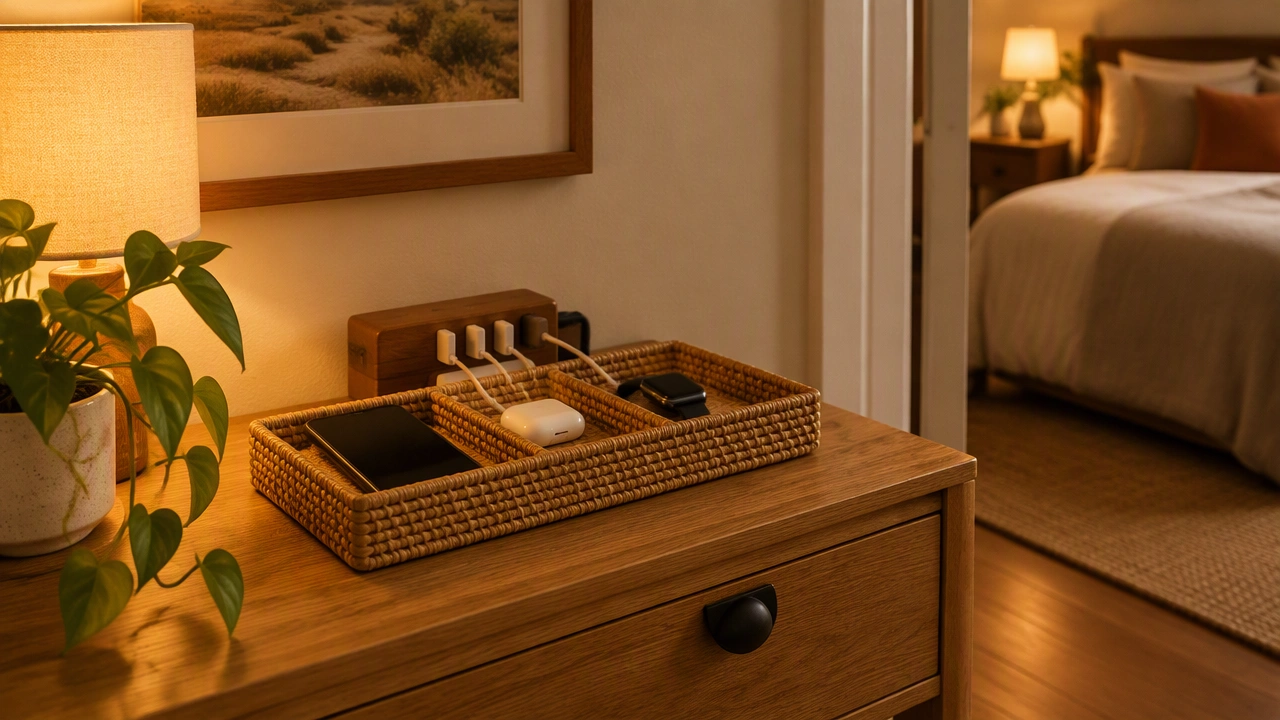
Create a Dedicated Charging Station Outside the Bedroom for Better Sleep
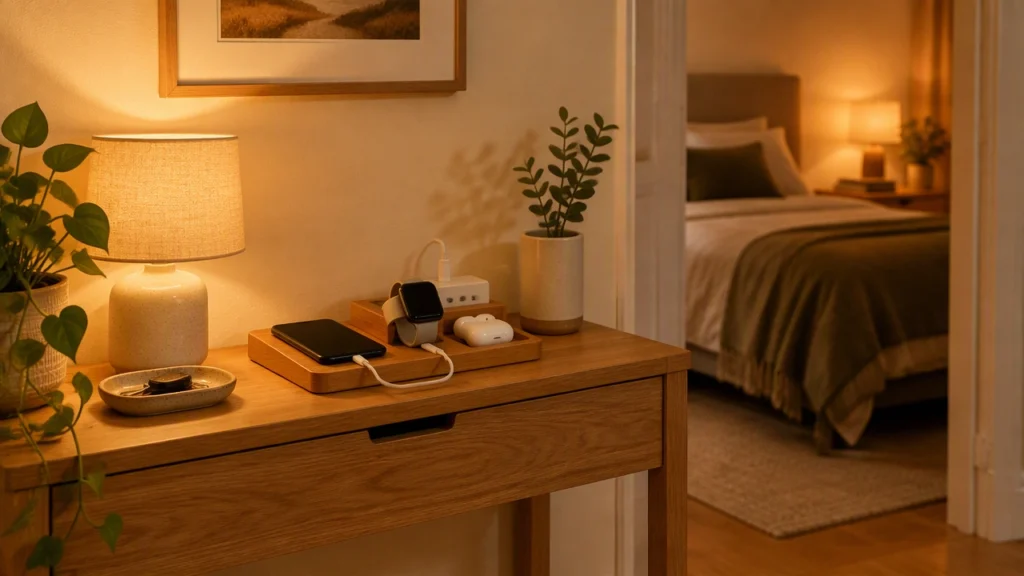
A calm night often begins before you get into bed. One of the most practical changes you can make is to create a dedicated charging station outside the bedroom, then use it as part of an evening phone station routine for better sleep hygiene. This simple boundary separates your sleeping space from the device that can pull attention in a dozen directions.
You do not need special equipment or a complete technology overhaul. You need a clear place for your phone, a short sequence of actions, and a bedroom that supports rest rather than stimulation.
Why the bedroom is the wrong place for a charger
When the phone charges beside the bed, it becomes part of the room’s cues for sleep. Notifications, bright screens, late messages, and the habit of reaching for one more scroll can keep the mind active at the exact moment you want it to settle.
A phone on the nightstand also makes ordinary nighttime waking feel like an invitation to check the time, read a headline, or respond to a message. Even a brief glance can shift your attention from your body and breath to tasks, opinions, or social updates.
Moving the charger changes the environment. The bedroom becomes a place for sleep, reading, conversation, and rest, while the phone has a predictable home elsewhere. The physical distance does most of the work, so you rely less on willpower.
Choose the right location for your charging station
Pick a spot that is easy to reach but not inside the room where you sleep. A hallway console, kitchen shelf, entryway table, or small desk in the living room can work well. The best location is one you pass naturally on the way to bed, so returning the phone feels effortless.
Make the station comfortable to use:
- Good lighting: A small lamp or nearby light helps you plug in the phone without fumbling.
- Enough outlets: Leave space for a charger, a watch, earbuds, or other devices that need to stay out of the bedroom.
- A clear surface: Avoid piles of mail, keys, or reminders that can trigger new tasks.
- Low noise: Choose a place where alerts will not follow you through the evening.
If other people share the home, agree on a station that does not block a doorway or common path. A shared boundary works best when it is convenient for everyone.
Build a simple evening phone station routine
A routine is more durable than a rule because it tells you exactly what to do. Keep the sequence short enough to repeat even on busy or tiring days.
Set a cutoff time
Decide when the phone will be plugged in for the night. Choose a time that gives you at least thirty minutes, and preferably an hour, without the device before sleep. Put the cutoff on a small note near the station if you need a visual reminder.
Complete the final practical tasks first
Before you walk away, check the few things that genuinely need the phone: tomorrow’s alarm, the next day’s calendar, and any urgent message you are expecting. Then close the apps that tend to open a new task, such as email, news, or group chats.
Dim the screen, place the phone on the charger, and leave it there. If you use the phone as an alarm, keep the alarm sound low and place the charger far enough away that you must stand up to turn it off.
Follow with a transition ritual
Give your attention somewhere else to go. A short sequence might be washing your face, preparing clothes for the morning, stretching gently, reading a few pages, or writing tomorrow’s first task on paper. Repeat the same two or three actions each night so your brain learns what comes next.
Keep the ritual quiet and physical. The goal is to move from input to recovery, not to replace one screen with another.
Make the bedroom rest-friendly
The charging station works best when the bedroom supports the same boundary. Remove other devices that glow, buzz, or invite attention. Cover standby lights if they bother you, lower the temperature slightly, and keep the room as dark as your comfort allows.
Use the bed for sleep and rest rather than planning, working, or scrolling. If you wake and cannot return to sleep, step out to the station, note the thought on paper, and come back when you feel sleepy. This keeps the bed associated with rest instead of problem-solving.
Handle common interruptions
What if someone may need to reach me? Use a normal phone’s do-not-disturb settings to allow calls from chosen contacts while silencing other alerts. Tell important people your routine so they know when you are reachable.
What if I use my phone to read or listen? Choose one purpose at the station. If you listen to an audiobook or calming music, start it before you plug in, set a timer, and place the phone outside the room. Avoid opening a feed that can turn one action into many.
What if I forget the routine? Reduce the number of steps. Keep the charger visible, place a small tray for the phone, and set a recurring reminder for the cutoff time. Consistency grows from convenience.
Keep the practice flexible
Review the routine after a week. Adjust the cutoff time if it feels too early or too late, move the station if the path is awkward, and remove any step that creates stress. The purpose is not perfection; it is to make rest the default.
On difficult nights, do the minimum: plug in the phone, set the alarm, and step away. Small repetitions build a strong boundary over time.
By giving your phone a dedicated home outside the bedroom, you create a clear line between the active day and the quiet night. The result is a calmer evening, a more restful bedroom, and a habit that supports better sleep without demanding constant self-control.